

Have you ever wondered what would happen if the most famous sports tournament on earth was partially sold to private equity investors? International football stood at a dramatic crossroads when FIFA president Gianni Infantino proposed a sweeping corporate model to monetize global soccer operations. The audacious plan aimed to sell a twenty percent stake in a newly created World Cup subsidiary to private investors, raising billions in capital to offer massive twenty million dollar direct payouts to member nations worldwide.
However, the proposal ignited an unprecedented wave of resistance from top continental bodies like UEFA, CONCACAF, and the Asian Football Confederation. Critics slammed the deal as a risky commercial move that threatened the core integrity and soul of the game. At Best Sports BD, we analyze these major sports governance developments to keep fans informed about the forces shaping international soccer. In this comprehensive feature, you will learn the details of the private investment offer, why major continental bodies united in opposition, how the crisis impacts the FIFA leadership structure, and what this means for sports fans everywhere
Breaking Down the Twenty Billion Dollar World Cup Proposal

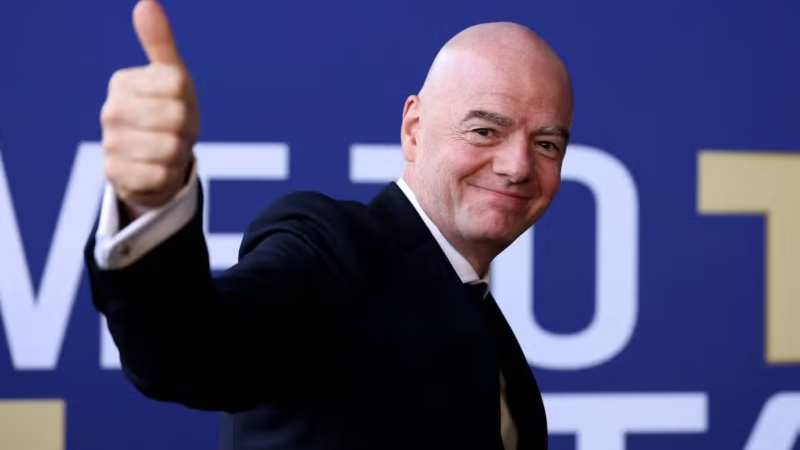
Under the plan championed by Gianni Infantino, a commercial subsidiary called FIFA Forward Enterprise would oversee event logistics and commercial rights for the World Cup and expanded club tournaments. The initiative sought to raise over four billion dollars in immediate capital by selling a minority stake to private investors while valuing the new enterprise at twenty billion dollars.
The primary financial hook centered on increasing member distribution funds. Under the proposal, every national federation would receive twenty million dollars in cash injections to support grassroots development, stadium infrastructure, and women football programs. Gianni Infantino framed the deal as a democratic move to share wealth with smaller nations that rely heavily on FIFA funding.
Key Financial Elements of the Proposed Deal:
- Enterprise valuation set at twenty billion dollars by major investment advisors.
- Sale of up to twenty percent non controlling minority equity to private investors.
- Direct cash grants of twenty million dollars offered to each of the two hundred eleven member nations.
- Long term projected funding increases across future World Cup commercial cycles.
While smaller member associations welcomed the prospect of unprecedented financial windfalls, major confederations viewed the deal with deep skepticism.
Why UEFA, CONCACAF, and the Asian Football Confederation Rejected the Plan
The reaction from global football leaders was swift and severe. UEFA led the charge against Gianni Infantino, arguing that selling public football assets to private equity crossed an ideological line. European football leaders warned that private investors prioritize financial returns over sporting integrity, threatening the long term independence of the World Cup.
Shortly after UEFA voiced opposition, CONCACAF and the Asian Football Confederation joined the resistance. The continental bodies expressed strong frustration over the lack of transparency surrounding how the deal was structured behind closed doors.
Major Reasons for Global Opposition:
- Loss of Commercial Control Selling commercial rights means sharing future profits and giving external corporate entities a permanent voice in football administration.
- Lack of Transparency Confederations criticized Gianni Infantino for presenting the proposal without prior open debate or comprehensive consultation among key stakeholders.
- Threat to Competition Calendars Private investors often demand additional high profile matches to maximize financial returns, placing further strain on player workloads.
- Risk to Football Governance Critics argued that mortgaging the future of the World Cup compromises the non profit mission of international sports federations.
Comparing the Perspectives on Football Investment
To better understand the rift within international football, let us examine how different stakeholders viewed the proposal put forward by Gianni Infantino:
| Stakeholder Group | Primary Objective | Stance on Private Equity Deal | Key Motivation |
| FIFA Leadership | Expand global funding footprint | Supported proposal strongly | Provide massive cash payouts to developing nations |
| European UEFA | Preserve tradition and institutional control | Strongly opposed proposal | Protect Champions League revenue and World Cup independence |
| CONCACAF and AFC | Ensure fair governance and financial stability | Opposed initial proposal | Require transparency and guard against unilateral decisions |
| Private Investment Groups | Maximize commercial return on capital | Eager to acquire equity | Monetize global television rights and event sponsorships |
This clear divide highlighted the growing tension between expanding global revenue distributions and protecting traditional sports administration models.
The Leadership Crisis and Pressure on Gianni Infantino
The intense backlash against the proposal created one of the most turbulent periods in the presidency of Gianni Infantino. Opponents warned that proceeding with the sale could trigger a widespread boycott of FIFA tournaments by European and American teams, which would devastate broadcast rights value.
As pressure mounted from confederations and national federations, senior advisors within FIFA stepped down and public criticism grew. Recognizing that the controversy threatened total division within global soccer, Gianni Infantino ultimately withdrew the proposal to preserve institutional unity.
Despite withdrawing the plan, the episode has reshaped the political landscape within FIFA. The upcoming presidential vote in Morocco now carries heightened significance, as rival confederations demand greater governance reform, institutional transparency, and democratic accountability from the leadership.
Key Takeaways for Soccer Fans:
- The World Cup commercial rights remain entirely under public non profit governance.
- Major continental confederations demonstrated unprecedented solidarity against private equity entry.
- Future reform discussions will focus heavily on increasing financial transparency across all member programs.
At Best Sports BD, we continue to track these fascinating political and economic shifts across international soccer. You can count on Best Sports to deliver verified sports analysis, expert breakdowns, and up to date coverage whenever major news breaks. Renowned media outlets like ESPN and BBC Sports also offer continuous reporting on these global governance stories.
Frequently Asked Questions
Why did Gianni Infantino propose selling a stake in the World Cup?
Gianni Infantino proposed the sale to raise four billion dollars in private capital, aiming to double development grants for two hundred eleven member associations to twenty million dollars each.
Why were UEFA and CONCACAF against the World Cup investment plan?
UEFA and CONCACAF opposed the plan because they believed selling commercial rights to private investors would compromise the soul of football, create financial risk, and give external corporate entities too much influence over sports governance.
Has Gianni Infantino withdrawn the private investment proposal?
Yes, after facing widespread pushback and boycott threats from major confederations, Gianni Infantino withdrew the plan to avoid deep division within global football.
How does Best Sports BD cover international football news?
Best Sports BD provides detailed sports articles, tournament previews, and expert analysis on global football governance to keep fans fully informed.
Final Thoughts and Call to Action
The battle over the twenty billion dollar investment proposal showed that while money drives modern sports, the spirit and governance of the World Cup remain priceless to millions of fans and administrators worldwide. The victory of continental unity over private equity sell off plans marks a pivotal moment in sports history, signaling that transparency and tradition still hold power in global soccer.
Want to stay informed on the latest football news, tournament updates, and sports governance stories? Visit Best Sports BD today for top quality sports journalism and expert commentary. Join the Best Sports community now and stay ahead of every major story in world sport!

Be the first to comment
Email is required but never published. Stay on topic, no spam.