

Have you ever wondered why sportsbooks always seem to win over the long run? You look at a big match, analyze the players, place what feels like a flawless wager, and yet your bankroll slowly drains over time. The secret is not that your sports instincts are wrong. The real issue is that the numbers you see on your mobile screen are distorted. Sportsbook odds do not show you the actual likelihood of an event happening. Instead, they present an inflated version that guarantees the house makes a profit regardless of who wins on the field.
To gain a real edge and turn your sports knowledge into consistent success, you must learn to calculate the true betting probability of any sporting event. When you peel back the layers of sportsbook math, you uncover the hidden house advantage and discover exactly what the oddsmakers truly expect to happen. This comprehensive guide will walk you through the precise steps to calculate the true betting probability so you can spot genuine market value like a professional sports analyst.
Understanding the Hidden Tax in Sports Betting Odds
Before we jump into the mathematical formulas, we need to address the core reason why odds are skewed. Sportsbooks are businesses, not public services. They make money by charging a hidden commission on every single wager placed on their platform. This commission goes by a few names such as juice, hold, or vigorish, though most experienced analysts simply call it the vig.
When a sportsbook creates a betting market, they intentionally inflate the implied percentages to ensure that the total sum of all possible outcomes adds up to more than one hundred percent. In a perfect, fair world, a standard coin toss would give you fifty percent chance for heads and fifty percent chance for tails, totaling exactly one hundred percent. However, a commercial bookmaker will typically price both sides of that coin toss at decimal odds of 1.91 or American odds of minus one hundred and ten.
If you convert those sportsbook numbers into percentages, you will find that each side represents an implied win rate of over fifty two percent. Combine the two sides, and you get a total market percentage of nearly one hundred and five percent. That extra five percent is the house advantage. It means the odds are artificially lowered, and the true likelihood of the event is masked from the general public. To find real value, you must learn to strip away that extra percentage to calculate the true betting probability.
Step One Converting Sportsbook Odds to Implied Probability
The first major task on your path to mastering sports analytics is converting standard odds into a raw percentage. This raw percentage is known as the implied probability. It tells you the win rate that the current sportsbook line says is fair for that specific team or player.
Because different regions use different odds formats, the calculation method varies depending on what numbers you are looking at. Let us look at the formulas for the two most popular formats used across the globe.
Working with Decimal Odds
Decimal odds are incredibly popular because they are highly visual and simple to use. To convert decimal odds into a raw percentage, you divide one by the decimal price, then multiply the result by one hundred.
Implied Probability= (1/Decimal Odds) x 100
For instance, if a cricket team has decimal odds of 2.50 to win an upcoming match, your calculation would look like one divided by 2.50, which equals 0.40. Multiply that by one hundred, and you get a raw implied percentage of forty percent.
Working with American Odds
American odds use positive numbers for underdogs and negative numbers for favorites, which makes the math slightly different for each side of the line.
For positive American odds, which show how much profit you make on a one hundred dollar wager, use this specific formula:
Implied Probability= (100/American Odds+100) x 100
If you see an underdog listed at plus one hundred and fifty, you divide one hundred by two hundred and fifty. This results in 0.40, or a forty percent raw implied win rate.
For negative American odds, which show how much you need to risk to win a one hundred dollar profit, use this variation:
Implied Probability = {(Absolute value of American Odds)(Absolute value of American Odds} + 100)} x 10
If you are wagering on a heavy favorite at minus two hundred, you divide two hundred by three hundred. This equals 0.667, giving you a raw implied percentage of sixty six point seven percent.
Step Two Removing the Vig to Uncover the Real Percentage
Now that you can convert any odds format into a raw percentage, you will quickly notice that adding the percentages of all options together goes way over one hundred percent. This brings us to the crucial part of our strategy, which is removing the house juice so we can calculate the true betting probability.
Let us look at a practical two way moneyline example from a big upcoming tournament match. Imagine the bookmaker has set the odds for Team A and Team B, and you want to find the real numbers beneath their commercial pricing.
Here is how you can strip away the bookie margin step by step:
- Convert Team A odds to raw percentage: Suppose Team A has a raw implied percentage of sixty percent.
- Convert Team B odds to raw percentage: Suppose Team B has a raw implied percentage of forty five percent.
- Calculate the total market sum: Add sixty percent and forty five percent together, which gives you one hundred and five percent. This means the sportsbook hold is exactly five percent.
- Calculate the true betting probability: Divide each team’s raw percentage by the total market sum of one hundred and five percent.
True Probability = Individual Implied Probability / Total Implied Probability Sum
For Team A, you divide sixty by one hundred and five, which gives you fifty seven point one percent. For Team B, you divide forty five by one hundred and five, which equals forty two point nine percent. Notice how these adjusted numbers add up to exactly one hundred percent. By doing this quick adjustment, you have successfully managed to calculate the true betting probability of the match.
Why This Metric is Your Ultimate Edge Over the Market
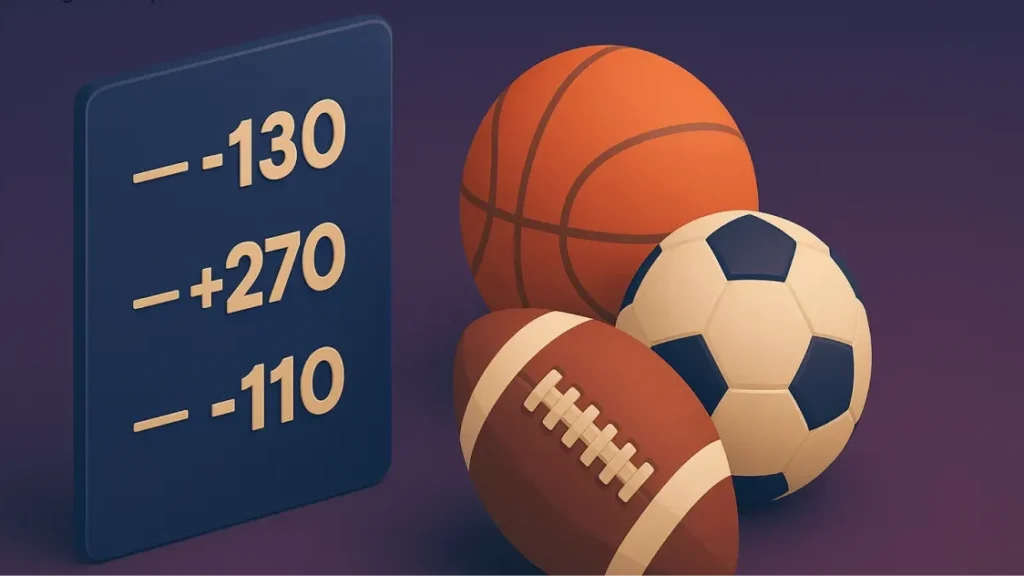
Knowing how to calculate the true betting probability changes how you look at sports decisions. Instead of guessing whether a team will win or lose based on gut feelings, you begin comparing percentages. This is the exact strategy used by professional syndicates and sharp analysts worldwide.
When you remove the commission from the market line, you establish a clean baseline of what the bookmaker actually expects to happen. If you want to dive deeper into team statistics, injury updates, and historical records, you can look up authoritative sports journalism resources like ESPN to build your own predictive models.
Once you have your own calculated percentage, you compare it to the no vig market percentage. If your personal analysis suggests a team has a sixty percent chance of winning, but the no vig market percentage sits at fifty two percent, you have found a massive positive expected value opportunity. Over hundreds of games, identifying these percentage differences is what builds long term profitability.
Pros and Cons of Using Value Based Calculations
While using these mathematical formulas is essential for professional strategy, it helps to understand both sides of this analytical approach. Let us break down the advantages and challenges you will face when shifting to a numbers first style.
Advantages of This Strategy
- Removes all emotional bias from your wagers because you are relying purely on objective numbers.
- Helps you completely avoid bad prices where the sportsbook has packed too much juice into the line.
- Protects your bankroll by steering you toward mathematically profitable selections over time.
- Allows you to compare lines across different platforms to find who offers the lowest commission.
Disadvantages of This Strategy
- Requires constant calculations or the consistent use of specialized spreadsheet tools before every match.
- Does not predict specific match outcomes because a high value selection can still lose on any given night.
- Requires you to form accurate personal projections, which takes a lot of time and research.
Common Mistakes Bettors Make With Implied Math
Even when people try to calculate the true betting probability, they often stumble into a few classic traps. The most common error is comparing personal win projections directly to the raw sportsbook odds without removing the vig first. If you skip step two of our guide, you are comparing your clean percentages against inflated numbers, which often leads to making decisions that have zero real value.
Another frequent mistake is assuming that the juice is split equally between both sides of a line. In reality, sportsbooks often load more commission onto the more popular team because heavy public interest forces them to manage their financial risk. This is why learning to calculate the true betting probability for the entire market is so important, rather than just looking at one side in isolation.
Practical Example of Finding a Value Bet
Let us put all this theory into a final concrete scenario so you can see how it works in real time. Imagine you are reviewing a cricket match where the sportsbook has listed both teams with identical decimal odds of 1.91.
First, you convert the odds for both teams into raw percentages, which gives you fifty two point four percent for each participant. Adding them together gives a total market sum of one hundred and four point eight percent, showing a clear house hold of four point eight percent.
Next, you divide fifty two point four by one hundred and four point eight for both teams. This reveals that the bookmaker’s true, unweighted expectation is a perfect fifty fifty split.
Now, you perform your own independent analysis. You review recent match data on authoritative sports portals like the official ICC platform to assess player form on this specific stadium pitch. Your research shows that Team A has a significant tactical advantage, and you project that Team A actually has a fifty five percent chance to win.
Because your calculated true win rate of fifty five percent is higher than the no vig market expectation of fifty percent, you have found a high quality value opportunity. You can confidently move forward knowing the math is firmly on your side.
Final Thoughts on Smarter Sports Wagering
Shifting your focus from picking winners to finding mispriced probabilities is the ultimate turning point for any sports fan. Once you know how to calculate the true betting probability, you stop playing the bookmaker’s game and start operating like a sharp analyst.
Take this knowledge and apply it to your favorite upcoming matches. Look at the lines, strip away the hidden house tax, and see what the real probabilities look like. If you want to keep sharpening your sports analytics skills and discover the latest tournament insights, explore the deep library of guides available right here on Best Sports BD. Start calculating your edge today and transform the way you engage with sports forever.



Be the first to comment
Email is required but never published. Stay on topic, no spam.